
Executive B2B Sourcing Report: Architectural Standards for Cosmetic Base Manufacturing
The modern B2B skincare ecosystem is undergoing a fundamental structural transition. Brand owners and procurement executives no longer evaluate contract manufacturers purely on volumetric pricing or rapid turnaround times. Driven by stringent global regulatory directives—such as the US FDA's Modernization of Cosmetics Regulation Act (MoCRA), the EU REACH frameworks, and stringent Halal standardization demands across Asia-Pacific—the focus has pivoted toward technical compliance, formulation stability, and information gain in supplier audits.
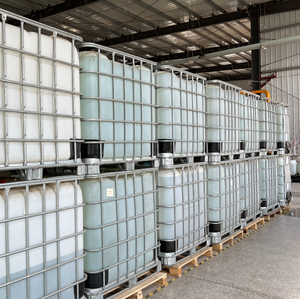
As premier contract manufacturers operating within full ISO 22716:2007 and cGMP certification parameters, top-tier factories serve as the technological backbone for international beauty houses. This comprehensive industry whitepaper delineates the chemical engineering benchmarks, supply chain risk management protocols, and product innovation roadmaps required when sourcing bulk cosmetic bases, botanical hydrosols, and functional facial mist toners.
Strategic Information Gain Insight: Modern consumers demand active-infused aqueous phases. Standard deionized water bases are rapidly being replaced by bio-fermented floral hydrosols (such as Rosa Damascena distillate) and multi-molecular hyaluronic acid matrices, elevating a basic toner from a simple pH-balancer to a high-potency skin barrier repair treatment.
1. Technical Evolution of Cosmetic Bases: From Inert Aqueous Carriers to Bio-Active Systems
Historically, facial toners and liquid cosmetic bases comprised up to 90% inert deionized water, stabilized with basic humectants such as propylene glycol and preserved with legacy parabens. Today, leading China and Asian OEM manufacturers have revolutionized cosmetic base architecture through three core innovation pillars:
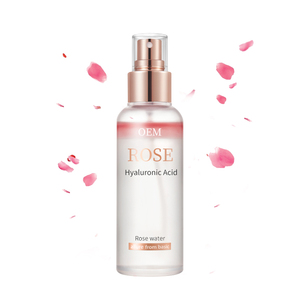
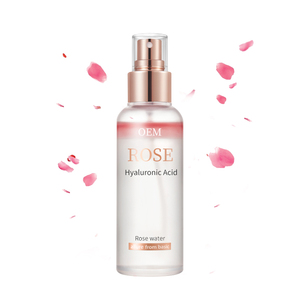
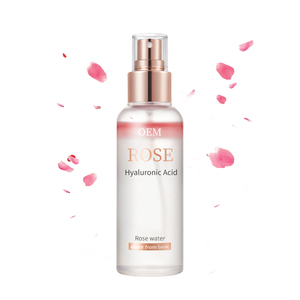
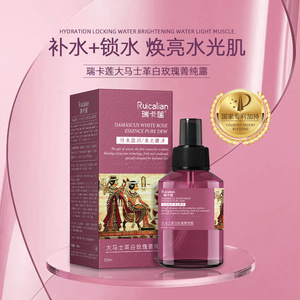
- Steam-Distilled Pure Flower Dew (Hydrosol) Integration: By utilizing low-temperature, closed-loop steam distillation of freshly harvested Rosa Damascena petals, manufacturers capture volatile aromatic compounds alongside water-soluble micro-nutrients. This process yields an inherently rich base containing natural polyphenols, flavonoids, and essential oils without synthetic fragrance additives.
- Multi-Tiered Hyaluronic Acid Vectoring: Advanced cosmetic bases feature cross-linked hyaluronic acid networks incorporating High Molecular Weight (HMW) HA for surface transepidermal water loss (TEWL) prevention, alongside Extra-Low Molecular Weight (ELMW) HA (under 10 kDa) for deep dermal hydration and cellular signaling.
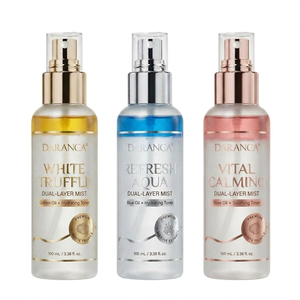
- Micro-Emulsified Lipid-in-Water Technology: Dual-phase toners (combining white truffle oils or botanical lipids with aqueous rose hydrosols) utilize non-ionic, PEG-free emulsifiers. This produces nano-droplet suspensions that ensure immediate bioavailability upon cutaneous application without leave-on greasiness.
2. Manufacturing Rigor: cGMP Controls & Zero-Contamination Infrastructure
Producing water-based botanical formulations like pure rose dew mist presents severe microbiological risks if manufacturing facilities lack ultra-pure water systems and sterile filling environments. Top-tier OEM facilities maintain stringent operational standards:
| Manufacturing Parameter | Standard Industrial Baseline | Top OEM / GMP Certified Standard |
|---|---|---|
| Water Purification | Single-pass Reverse Osmosis (RO) | Dual-Pass RO + Electro-Deionization (EDI) + Continuous UV Sterilization (< 10 CFU/ml) |
| Cleanroom Classification | Class 100,000 (ISO Level 8) | Class 10,000 (ISO Level 7) High-Efficiency Particulate Air (HEPA) Filtered Environment |
| Preservation Testing | Basic 14-day USP microbial challenge | 28-day ISO 11930 Preservation Efficacy Test (PET) covering 5 indicator pathogens |
| Stability Testing Protocol | Room temperature monitoring | 45°C accelerated thermal stability, freeze-thaw (-10°C to +40°C 5-cycle), and UV photostability |
| Traceability System | Manual paper batch records | Fully integrated SAP/MES digital batch tracking with raw material lot lineage |
3. Global Procurement Trends: 2025–2030 Market Requirements
Procurement directors sourcing cosmetic bases from OEM partners must align their supply chain architecture with major macroeconomic and consumer shifts defining the global beauty landscape over the next decade:
A. Upstream Ethical Sourcing & Halal Compliance
With global demand for Halal-certified cosmetics projected to exceed USD 100 billion by 2030, OEM factories must provide 100% porcine-free, cruelty-free, and alcohol-free supply chain documentation. Halal certification guarantees that zero cross-contamination occurs during storage, blending, or automated filling, appealing strongly to consumer bases across Southeast Asia, the Middle East, and Western clean-beauty demographics.
B. Clean Beauty 2.0 & Preservative Innovation
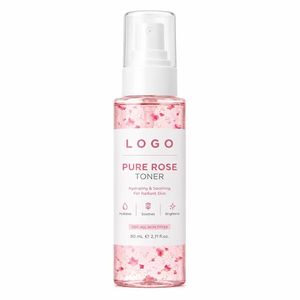
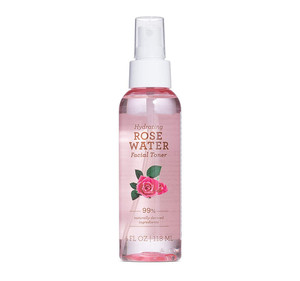
Regulatory scrutiny over traditional preservers (e.g., phenoxyethanol, parabens, and formaldehyde releasers) has forced OEM formulators to engineer self-preserving systems. Modern rose water mists utilize natural multifunctional glycols (such as Pentylene Glycol derived from sugarcane) combined with organic acid chelators (like Sodium Phytate) to achieve a 24-month shelf life without skin irritation.
C. Customization Versatility & Low MOQ Agility
Direct-to-Consumer (DTC) brands and emerging indie beauty lines require agile manufacturing models. Benchmark OEM factories maintain pre-tested "master base formulations" that permit rapid customization. Brand owners can alter active extract percentages, viscosity profiles, and packaging formats (mist spray pumps, dropper bottles, or glass vials) with minimum lead times.