Turnkey, Halal-certified, and cGMP-compliant mineral sun care products designed for seamless white-label customization and rapid global distribution.
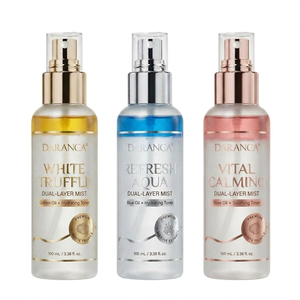
An ultra-lightweight mineral mist combining botanical rose water, white truffle extract, and micronized non-nano Zinc Oxide for immediate UV defense and oxidative stress prevention.
Get a Quote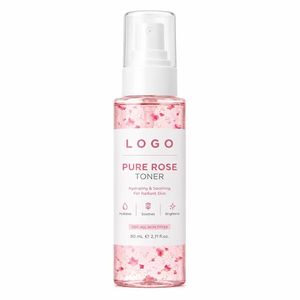
Formulated with Korean beauty standards, featuring organic Damascus rose extract and physical mineral filters that hydrate skin while blocking harmful UVA/UVB rays with zero white-cast.
Get a Quote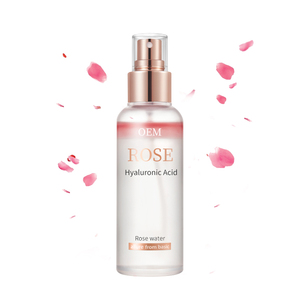
A dual-action repairing facial toner enriched with multi-molecular hyaluronic acid and mineral sun protection agents to reinforce the skin barrier and prevent photoaging.
Get a Quote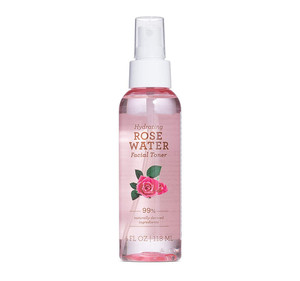
Eco-friendly physical UV mist formulated without oxybenzone or octinoxate. Instantly calms sun-exposed skin while maintaining water resistance for active outdoor lifestyles.
Get a Quote
Premium distilled rose petal water blended with titanium dioxide micro-particles to illuminate uneven skin tone while offering high-level broad spectrum protection against solar radiation.
Get a Quote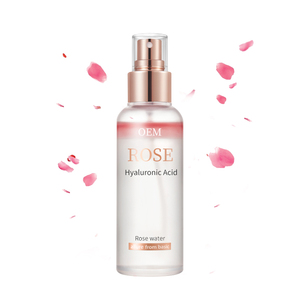
Highly customizable OEM emulsion base allowing brand owners to add tint, peptide complexes, or specific antioxidants to suit target regional market preferences and skin types.
Get a Quote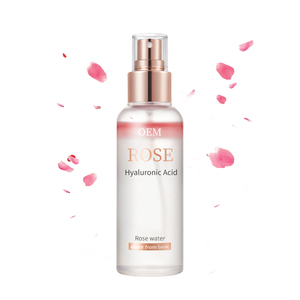
Designed for post-procedure and hyper-sensitive skin. Combines therapeutic herbal hydrosols with physical blockers to soothe inflammation while safeguarding against solar redness.
Get a Quote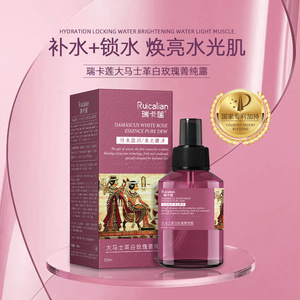
An elegant 125ml retail-ready mineral sunscreen essence mist containing organic Damascus flower distillate, providing a dewy finish and robust daily defense against HEV blue light.
Get a QuoteThe global sun care market is undergoing a seismic paradigm shift. Valued at over USD 14.2 Billion in 2024 and projected to expand at a CAGR of 6.8% through 2030, demand is aggressively veering away from legacy chemical filters (such as Oxybenzone, Octinoxate, and Avobenzone) toward physical, mineral-based sunscreens utilizing Non-Nano Zinc Oxide (ZnO) and Titanium Dioxide (TiO2).
Driven by tightening global environmental legislation—notably marine safety mandates across Hawaii, Palau, the U.S. Virgin Islands, and the European Union—and an increasingly ingredient-savvy consumer base, cosmetics brands must secure contract manufacturing partners capable of mastering physical filter stabilization. Unlike chemical absorbers that convert UV radiation into heat within the dermis, mineral sunscreens form a physical barrier on the stratum corneum, reflecting and scattering UVA (320–400 nm) and UVB (290–320 nm) wavelengths without causing hormonal disruption or contact allergies.
Formulating high-performance mineral sunscreens presents severe rheological and aesthetic engineering challenges: mineral agglomeration, heavy white cast, sensory chalkiness, and phase separation. When auditing prospective Original Equipment Manufacturers (OEM) and Original Design Manufacturers (ODM), enterprise buyers must evaluate factories based on rigorous technological standards.
Leading factories utilize high-shear homogenization and specialized ester/silicone surface coatings (e.g., Triethoxycaprylylsilane) to uniformly disperse Non-Nano Zinc Oxide particles (>100nm), completely eliminating white cast while retaining broad-spectrum efficacy.
Top-tier manufacturers maintain cGMP (US FDA OTC drug compliance), ISO 22716 certification, and regional regulatory compliance including US FDA Monograph, EU Cosmetic Regulation EC 1223/2009, and ASEAN Cosmetic Directives.
Elite contract manufacturers operate dedicated photostability and analytical labs capable of conducting In-Vitro Critical Wavelength testing, accelerated 50°C stability testing, centrifuge stress tests, and ISO 24444 In-Vivo SPF verification.
Facilities with JAKIM Halal certification provide brand owners access to the rapidly growing $300B+ global Halal personal care market, guaranteeing zero porcine-derived emollients and strict cross-contamination protocols.
Modern factories must support eco-friendly packaging integration, including Post-Consumer Recycled (PCR) plastics, ocean-bound plastic resins, aluminum tubes, and airless pump technologies to protect un-preserved natural formulas.
Agile manufacturers offer scalable Minimum Order Quantities (MOQs)—ranging from pilot runs of 1,000 units for market testing to automated high-volume production exceeding 500,000 units per month.
Understanding the structural differences between manufacturing models is essential for optimizing profit margins, speed-to-market, and intellectual property ownership.
| Evaluation Vector | Private Label (White Label) | OEM (Original Equipment Mfg.) | ODM (Original Design Mfg.) |
|---|---|---|---|
| Formulation Ownership | Stock Factory Formula | Client Custom Formula (IP Owned) | Manufacturer Turnkey IP |
| Speed-to-Market | Fastest (2 – 4 Weeks) | Moderate (12 – 24 Weeks) | Rapid (6 – 8 Weeks) |
| R&D / Customization | Packaging & Scent Only | 100% Bespoke Actives & Textures | Semi-Custom Formulation Adjustments |
| Regulatory Testing Burden | Pre-Tested by Factory | Full Client Testing Required | Pre-Validated by Factory |
| Initial Capital Investment | Low | High (R&D + Tooling) | Moderate |
To capture long-term market share, brand managers and procurement executives must align product roadmaps with emerging technical innovations in sun care formulation science.
Driven by sustainability mandates and travel convenience, waterless mineral sun sticks formulated with natural plant waxes (Candelilla, Jojoba) and oil-dispersed Zinc Oxide are experiencing a 35% YoY increase in procurement volume. Water-free environments eliminate the need for synthetic preservatives, satisfying stringent clean-beauty standards.
Modern mineral sunscreens are no longer single-utility sun protection products. Procurement trends favor hybrid formulations infused with high-potency antioxidants (Niacinamide, Ferulic Acid, Ectoin, Damascus Rose Water) and Iron Oxides to protect against High-Energy Visible (HEV) blue light from digital screens and environmental particulate matter (PM 2.5).
To serve diverse global skin tones, contract manufacturers are deploying micro-encapsulated pigment technology. Iron oxide pigments remain encapsulated in cellulose beads until rubbed onto the skin, bursting upon application to provide seamless, shade-adapting coverage while masking physical mineral opacity across all Fitzpatrick skin types.
Replacing volatile synthetic silicones (D4/D5 Cyclomethicones) with bio-based alkanes derived from sugarcane or coconut oil allows brands to claim 100% readily biodegradable formulas. These plant-derived carriers mimic the velvety slip of cyclomethicone without accumulating in marine ecosystems.
Established in 1991 in Penang, Malaysia, Sky Resources Group has solidified its position as Southeast Asia's premier Halal-certified OEM, ODM, and Private Label skincare manufacturer. With over 34 years of continuous GMP leadership, our state-of-the-art facility powers global beauty brands across more than 30 countries.
Our dedicated R&D chemical engineering team formulates over 1,500 stable, high-performance skincare, sun care, and cosmetic products each year.
Fully certified under ISO 22716, cGMP, and JAKIM Halal compliance, guaranteeing smooth customs clearance across EU, US, and Middle Eastern markets.
From raw botanical sourcing to packaging design, regulatory filing, and international warehousing, we deliver end-to-end operational efficiency.
Expert technical answers regarding regulatory compliance, manufacturing timelines, stability testing, and custom mineral sunscreen formulation.
Selecting an OEM mineral sunscreen manufacturer requires verifying critical operational credentials: 1) Verify verified cGMP (US FDA OTC compliant) and ISO 22716 cleanroom certifications; 2) Confirm in-house photostability, centrifuge, and In-Vitro SPF testing capabilities; 3) Evaluate particle dispersion expertise to ensure white-cast mitigation using non-nano Zinc Oxide; and 4) Demand full supply chain transparency regarding raw material origins and reef-safe compliance certification.
Non-Nano Zinc Oxide consists of primary particle sizes greater than 100 nanometers (>100nm). This size ensures particles cannot penetrate the epidermal skin barrier into the bloodstream, nor can they be ingested by coral polyps, making Non-Nano Zinc Oxide the gold standard for human safety and reef-safe environmental compliance. Nano-scale Zinc Oxide (<100nm) offers greater transparency but faces regulatory restrictions in marine eco-zones and eco-labeling standards.
Sunscreen regulations vary significantly by market. In the United States, sunscreens are classified as Over-The-Counter (OTC) drugs governed by the FDA Sunscreen Monograph, requiring production in an FDA-registered OTC facility. In the European Union, sunscreens are cosmetics under Regulation EC 1223/2009, requiring a Responsible Person (RP), Cosmetic Product Safety Report (CPSR), and CPNP portal notification. In ASEAN nations, formulas must adhere to the ASEAN Cosmetic Directive.
Advanced contract factories eliminate white cast by employing specialized surface-treated mineral powders (such as coating Zinc Oxide with Triethoxycaprylylsilane or Polyhydroxystearic Acid) combined with high-shear emulsification processing. This ensures discrete, non-agglomerated mineral particle dispersion within the oil phase of an emulsion, maximizing light scattering while allowing visible light transmission to maintain transparency on the skin.
For stock private label formulations, initial order MOQs typically range from 1,000 to 3,000 units with lead times of 3 to 4 weeks. For fully bespoke OEM/ODM custom formulations requiring custom packaging tooling, stability testing, and regulatory filings, standard MOQs range from 5,000 to 10,000 units per SKU, with production timelines averaging 12 to 16 weeks from formulation sign-off.
Halal certification guarantees that all ingredients (such as emollients, emulsifiers, and glycerin) are strictly free from porcine derivatives or non-slaughtered animal byproducts, and produced in sanitized facilities free from cross-contamination. Halal-certified sunscreens appeal not only to the 1.9 billion Muslim consumers worldwide but also to clean-beauty advocates seeking rigorous purity and ethical production standards.
Before commercialization, a private label mineral sunscreen must undergo: 1) Accelerated Stability Testing (45°C/75% RH for 12 weeks to simulate 2-year shelf life); 2) Photostability Testing (exposing the formula to UV radiation to ensure filters do not degrade); 3) Preservative Efficacy Testing (PET / Challenge Test according to USP <51> or ISO 11930); 4) Freeze-Thaw Cycling (-10°C to 40°C over 3 cycles); and 5) Packaging Compatibility Testing to ensure no leaching or deformation.
In standard B2B sunscreen manufacturing, unit costs are distributed across four main pillars: Bulk Formula (30–40%, driven by active mineral concentrations and specialized botanical hydrosols), Primary & Secondary Packaging (35–45%, including airless pumps, UV-coated bottles, and FSC boxes), Testing & Regulatory Compliance (10–15%, amortized across production volume), and Freight/Logistics (5–10%). Bulk mineral dispersion cost varies based on SPF rating (SPF 30 vs SPF 50+).
Partner with Sky Resources Group—Malaysia's trusted OEM/ODM pioneer with 34+ years of formulation excellence. Request custom samples, review factory COAs, or discuss low-MOQ pilot production with our technical sales engineers today.
Get a Quote