Technical Whitepaper
1. Market Dynamics & The Bio-Lipid Paradigm Shift in Contract Manufacturing
The global luxury skincare sector is undergoing a structural transition toward waterless (anhydrous) skincare and lipophilic barrier repair systems. Driven by consumer demands for micro-plastic-free, preservative-reduced, and highly concentrated active matrices, facial oils have elevated from niche botanical elixirs to central functional pillars in prestige skincare regimens. According to global beauty trade intelligence, the contract manufacturing market for specialized facial oils and bi-phase oil-toner mists is expanding at a projected CAGR of 8.4% through 2030, driven predominantly by Asian manufacturing centers boasting advanced extraction infrastructure.
When selecting China top contract facial oil manufacturing suppliers & exporters, global brand owners, indie beauty founders, and enterprise distributors must evaluate suppliers far beyond basic per-unit pricing. Premium lipophilic formulations demand stringent oxidation protection, precise fatty acid bio-compatibility profiles, and advanced processing capabilities such as supercritical CO2 extraction and nitrogen-purged filling lines. A failure in lipid stabilization leads to rapid rancidity, degradation of active phytochemicals, and catastrophic brand equity loss.
Oxidative Stability Index (OSI)
Tier-1 contract manufacturers utilize Rancimat test protocols to guarantee lipid integrity. By integrating natural d-alpha tocopherol, rosemary leaf extract (carnosic acid), and ascorbyl palmitate, facial oils maintain a target peroxide value below 5 meq/kg across a 36-month shelf life.
Bi-Phase Emulsification Tech
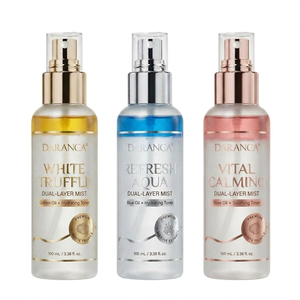
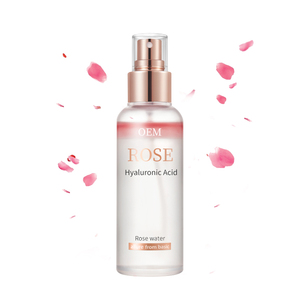
Innovations in bi-phase mists (combining hydro-distillates like Damascus Rose Water with lipophilic carrier phases like Squalane or White Truffle Oil) require precise surface tension engineering to achieve instant re-emulsification upon shaking without synthetic PEG surfactants.
Microbiome & Barrier Chemistry
Modern contract formulations focus on biomimetic lipid architecture. Ratios of Essential Fatty Acids (EFAs)—specifically Linoleic Acid (Omega-6) and Alpha-Linolenic Acid (Omega-3)—are calibrated to match natural human sebum profiles for non-comedogenic absorption.
2. Bio-Active Ingredients & Lipophilic Formulation Science
A true high-performance contract facial oil is defined by its molecular chemistry. Leading original equipment manufacturers (OEM) and original design manufacturers (ODM) leverage cold-pressed seed oils, marine-derived actives, and precious botanical extracts to deliver tangible dermatological outcomes. Understanding ingredient physics is imperative for procurement officers constructing high-margin skincare portfolios.
| Ingredient Category |
Primary Bioactive Compounds |
Fatty Acid / Molecular Profile |
Target Dermatological Efficacy |
Stability & Sourcing Considerations |
| Damask Rose Distillate & Essential Oil |
Citronellol, Geraniol, Nerol, Phenylethyl Alcohol |
Hydro-aromatic complex + volatile terpenes |
Anti-inflammatory, vascular toning, micro-vascular stimulation |
Requires low-temperature steam distillation; source traceable to Bulgarian / Anatolian rose petals. |
| White & Black Truffle Lipids |
Tuber extracts, Phytosterols, Essential Fatty Acids |
Rich in Linoleic acid & Ceramides |
Cellular membrane regeneration, deep lipid replenishment, anti-glycation |
Lipophilic maceration or supercritical extraction to preserve enzymatic actives without thermal denaturation. |
| Plant-Derived Squalane |
Hydrogenated Trans-Squalene (Olive or Sugarcane origin) |
Fully saturated hydrocarbon (C30H62) |
Transepidermal Water Loss (TEWL) reduction, sebum biomimicry |
Exceptionally stable; resistant to oxidation and heat; ideal carrier base for high-performance facial serums. |
| Bi-Phase Hyaluronic Acid Complex |
Sodium Hyaluronate (Multi-molecular weights: 3k Da to 1.8M Da) |
Aqueous phase active bound in botanical dew |
Multi-depth hydration, stratum corneum plumping |
Requires micro-dispersion technology to prevent phase separation before shaking. |
| Rosehip & Argan Cold-Pressed Oils |
All-trans Retinoic Acid, Tocopherols, Oleic/Linoleic acids |
High Omega-3, 6, 9 content (C18:1, C18:2) |
Scar remodeling, photo-aging repair, lipid barrier synthesis |
Highly sensitive to UV and atmospheric oxygen; requires nitrogen flushing during storage and packaging. |
Contract manufacturing facilities must adhere to stringent quality verification steps for incoming raw materials. Gas Chromatography-Mass Spectrometry (GC-MS) testing is deployed to verify purity, ensure the absence of synthetic dilution agents (such as mineral oil or low-cost isopropyl palmitate), and confirm pesticide residue levels comply with European Pharmacopoeia and US FDA guidelines.
3. Global Sourcing & Procurement Trends for Facial Oils (2025–2030)
As the international skincare market matures, purchasing managers, supply chain directors, and B2B buyers must adapt to four transformative macro-trends currently restructuring contract manufacturing capabilities in China and broader Asian hubs:
Trend 1: Bio-Fermented Botanical Oils & Postbiotics
Traditional cold-pressed oils are increasingly upgraded via microbial fermentation. Fermenting oils like Camellia, Argan, or Olive with pseudozyma epicola yeasts breaks down triglycerides into free fatty acids, reducing surface viscosity, increasing bio-availability by up to 400%, and eliminating greasy residue without adding silicones.
Trend 2: Upcycled & Zero-Waste Seed Extractions
Sustainability is no longer optional for European and North American consumers. Contract suppliers are investing in upcycled botanical streams—extracting high-value facial oils from juice manufacturing side-products (e.g., passionfruit seed oil, raspberry seed oil, and apple seed lipids), reducing carbon footprints while delivering potent antioxidant profiles.
Trend 3: Nitrogen-Sparged Airless Packaging Integration
Formulation degradation during filling remains a primary liability. Modern automated contract lines incorporate inline nitrogen sparging prior to bottle capping. Replacing ambient oxygen inside container headspaces ensures sensitive actives like Rosehip Oil, Vitamin C (THD Ascorbate), and Retinol remain potent throughout global export transit.
Trend 4: Clean-Label & Preservative-Free Bi-Phase Architecture
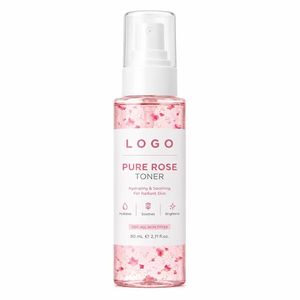
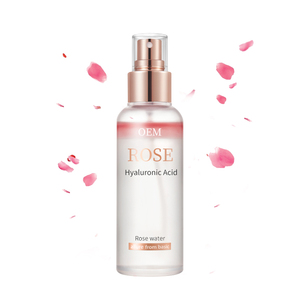
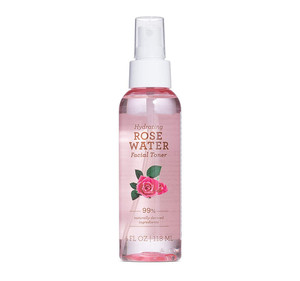
Driven by strict clean beauty regulations (MoCRA in the US, EC 1223/2009 in Europe), contract manufacturers are formulating bi-phase face mists that utilize naturally antimicrobial botanical waters (like pure Rose Hydrosol) paired with self-preserving oil phases, eliminating phenoxyethanol, parabens, and synthetic chelating agents.
4. Contract Manufacturing Evaluation Matrix: OEM vs. ODM vs. Custom R&D
Determining the correct manufacturing engagement model impacts time-to-market, capital expenditure (CapEx), intellectual property (IP) ownership, and minimum order quantities (MOQs). The matrix below outlines operational benchmarks for procurement teams:
| Strategic Parameters |
OEM (Original Equipment Manufacturing) |
ODM (Private Label / Ready Formulas) |
Bespoke Custom R&D Formulation |
| Formulation Ownership |
Client owns or provides custom formulation specifications. |
Manufacturer holds IP; client brands existing market-proven base. |
Exclusive IP developed jointly or assigned to client upon contract. |
| Time-to-Market |
Standard (12 to 16 Weeks) including pilot batch stability. |
Fast-Track (4 to 6 Weeks) using pre-tested stock formulas. |
Comprehensive (16 to 24 Weeks) due to challenge & regulatory testing. |
| Minimum Order Quantity (MOQ) |
5,000 – 10,000 units per SKU |
1,000 – 3,000 units per SKU |
10,000+ units per SKU |
| R&D / Customization Degree |
Moderate (Adjusting fragrance, active percentages, oil base). |
Low (Selecting stock fragrance, packaging, and label artwork). |
Maximum (Developing novel textures, bi-phase tech, active patents). |
| Regulatory Testing Burden |
Client & Supplier co-verify stability and compatibility. |
Pre-validated by supplier (Dermatologically tested, CPNP ready). |
Full battery required: Preservative Efficacy (PET), Photostability, HRIPT. |
Buyer Guidance
5. Contract Manufacturing & B2B Sourcing FAQs
Answers to critical technical, operational, and regulatory questions when sourcing contract facial oil manufacturers and exporters from China.
How do contract manufacturers prevent natural facial oils from oxidizing and turning rancid?
Rancidity occurs when unsaturated fatty acids react with oxygen, producing peroxides and aldehydes. Top contract manufacturers prevent oxidation through three key measures: (1) Sourcing high-initial-purity oils with low Peroxide Values (<2.0 meq/kg); (2) Formulating with synergistic natural antioxidant systems—typically 0.1% to 0.5% mixed Tocopherols combined with Rosemary Leaf Extract (Carnosic acid); and (3) Implementing nitrogen-purged mixing tanks and nitrogen head-space flushing during packaging to eliminate air contact.
What certifications are mandatory for exporting private label facial oils to Europe and the US?
For the US market, compliance with the FDA Modernization of Cosmetics Regulation Act (MoCRA) is required, meaning the facility must be FDA registered, follow Good Manufacturing Practices (GMP), and have a US Responsible Person. For the European Union, the facility must comply with ISO 22716 / GMP standards, provide a comprehensive Cosmetic Product Safety Report (CPSR) authored by a qualified safety assessor, and complete Notification on the CPNP portal.
What is the difference between a standard facial oil and a bi-phase oil mist?
A standard facial oil is an anhydrous (waterless) single-phase solution composed entirely of lipophilic carriers and oil-soluble active ingredients. A bi-phase facial mist contains two distinct un-emulsified layers: an aqueous phase (e.g., Damask Rose water, Glycerin, Hyaluronic Acid) and a lipophilic phase (e.g., Truffle oil, Squalane). Upon shaking, the two phases form a temporary micro-emulsion for lightweight, hydration-plus-occlusion application without heavy emulsifiers.
What are standard lead times for custom private label facial oil production?
Lead times depend on customization. For ready-to-go ODM stock formulations with standard packaging, production takes 3 to 4 weeks post-artwork approval. For custom OEM formulations requiring new active sourcing, custom bottle tooling, stability testing, and compatibility challenge tests, timeline averages 8 to 12 weeks. International shipping typically adds 2 to 4 weeks depending on freight mode (air vs. ocean).
Can contract facial oil manufacturers supply Halal, Organic, and Vegan certified formulas?
Yes. Premium certified manufacturers like Sky Resources maintain dedicated production suites audited for Halal compliance (JAKIM/MUI recognized), COSMOS/ECOCERT organic ingredient tracking, and Vegan certification (free from lanolin, beeswax, squalene from shark liver, or carmine). All raw material chains are documented with Certificates of Analysis (COA) and MSDS sheets.
What packaging materials are safest for high-active facial oils and rose waters?
Glass (specifically Type III amber, cobalt blue, or UV-blocking violet glass) is the gold standard for pure facial oils to prevent UV-induced oxidation and plasticizer leaching. For bi-phase mists and sprays, high-density polyethylene (HDPE) or premium heavy-wall PETG containers equipped with ultra-fine mist spray pumps are used, ensuring chemical inertness and zero stress-cracking when exposed to volatile essential oils.
6. Step-by-Step OEM/ODM Manufacturing Workflow
Working with a professional contract manufacturing supplier ensures structured quality checkpoints at every phase of product development:
Step 1: Brief & Concept
Define active ingredients, sensory profile, target retail price, market certifications, and packaging formats.
Step 2: Lab Sampling
R&D chemists formulate prototype samples for texture, absorption rate, natural aroma, and micro-phase testing.
Step 3: Quality Assurance
Accelerated thermal testing, compatibility testing with dropper bottles/pumps, and preservative challenge assays.
Step 4: Scale & Export
GMP automated mass filling under cleanroom conditions, nitrogen sparging, regulatory filing, and global logistics dispatch.
Ready to Scale Your Private Label Facial Oil Portfolio?
Partner with a certified industry leader offering 34+ years of formulation expertise, 1,500+ annual active formulas, and full turn-key export support to 30+ countries. Request custom samples and technical quotations today.
Get a Quote